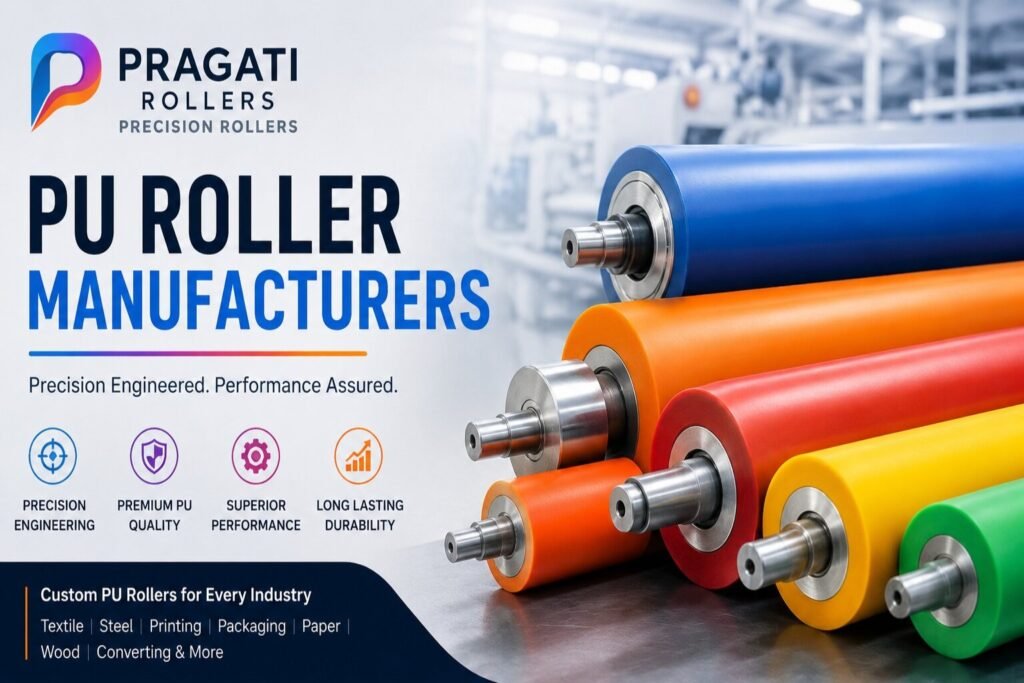
Performance and material quality of rollers directly impact various industrial processes. As these are used in printing, coating, and surface treatment operations, they need to be installed with careful consideration. A wrong choice can lead to several issues like slow production rate, inconsistency of operations, poor quality of surface treatments, and all of it costs a lot for the business. These are productivity and precision issues that are addressed by PU roller manufacturers. They offer polyurethane rollers, which have the right solution to the common industrial problems when it comes to rolling operations.
Common Rolling Problems Faced by Industries
Rolling components are exposed to continuous stress. As a result, they develop performance gaps, poor efficiency and the quality of output is affected.
Surface Wear
In the guiding, tensioning, shaping and other processes, friction is quite strong due to high speed. This results in wear of the surface in the substandard rollers made of metal or low-quality rubber. They grind quickly and fail to deliver the expected performance.
Slippage and Loss of Control
Some buyers use materials that have poor grip. It serves no meaningful purpose in the respective operations. By slippage and loss of control, the entire workflow is impacted negatively.
How PU Rollers Provide Effective Solutions
PU roller manufacturers remove these errors and drawbacks by composing a reliable material with enough strength, traction and resistance. These perform as expected under varying load conditions.
Better Durability and Performance
Even in high-friction operations, the PU rollers maintain stability. They resist abrasion, cuts, and deformation under pressure. These ensure uninterrupted performance in conveyor systems and automated supply lines. Their elastic properties allow a uniform pressure distribution.
Improved Operational Precision
With a controlled grip, the PUR rollers maintain better alignment during operations in printing and packaging. This leads to fewer production errors over the long hours of production and less material wastage. Their combination of precision and speed makes them a reliable choice.
Reduced Noise and Vibration
PU rollers absorb vibrations during movement way better than other materials. The impact generated by moving components and mechanical stress on adjacent parts, such as bearings and shafts, is lowered. The equipment experiences less wear, and its chances of failure are reduced. Low noise creates a sense of a comfortable work environment for the employees.
Adaptable in Harsh Environments
As the printing, packaging and textile industry operations often use corrosive chemicals like oil, colours and binding agents, the surface of ordinary roller materials gets affected. Changes in temperature and exposure to fluids are also a concern. Polyurethane is highly effective in these environments. It works remarkably well, adapting to these challenging conditions.
Conclusion
Printing, labelling, textile and other industrial operations depend on high quality rolling systems to maintain efficiency and output quality. Some common challenges such as wear, slippage, and environmental damage, are resolved by using PU rollers. They offer a practical and durable solution for the industries. Partnering with experienced PU roller manufacturers, like Pragati Rollers, ensures access to high-quality products tailored to specific operational needs, ultimately improving long-term performance.